By Rebekah Planto, PhD
Constructed between 1665 and 1675, Bacon’s Castle is Virginia’s oldest standing house, and the only surviving structure directly involved in Bacon’s Rebellion. In the mid-1980s, archaeologists excavating the garden at Bacon’s Castle made a surprising discovery. Test units along what turned out to be the southeast edge of the garden revealed a concentration of artifacts dating to the late 17th century (Figure 1).
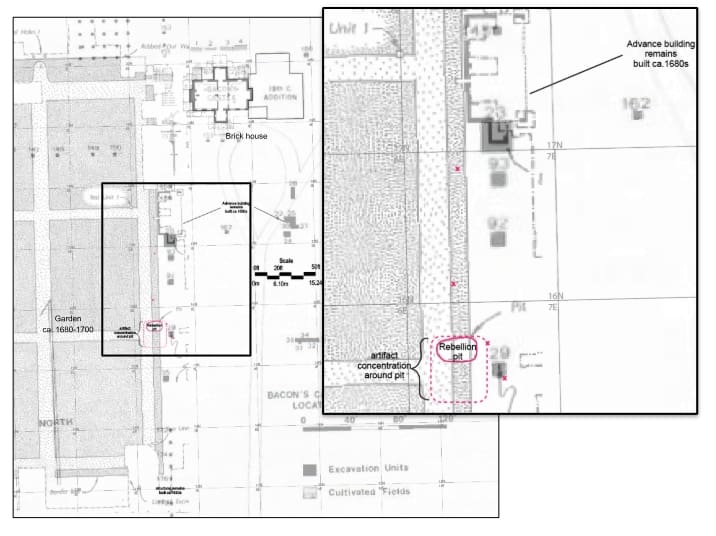
The archaeologists, led by Nicholas Luccketti, of the James River Institute for Archaeologist Inc., determined that the garden had been created around the same time (ca. 1680-1700), along with at least two “advance buildings” which would have framed the approach to the brick house. initially, they thought they had encountered the remains of another related structure, or perhaps a well (1). However, further excavation revealed that these artifacts were not coming from a cellar or well, but from a wide, shallow pit concealed below the garden path and planting beds (Figures 2-4).
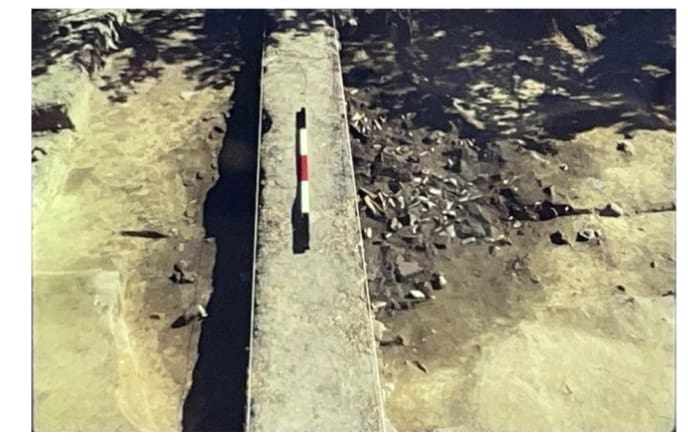
Figure 2 (Top left) Aerial view of the Rebellion pit (facing east) with only the top of the refuse deposit exposed (Luccketti/JRI 1984).
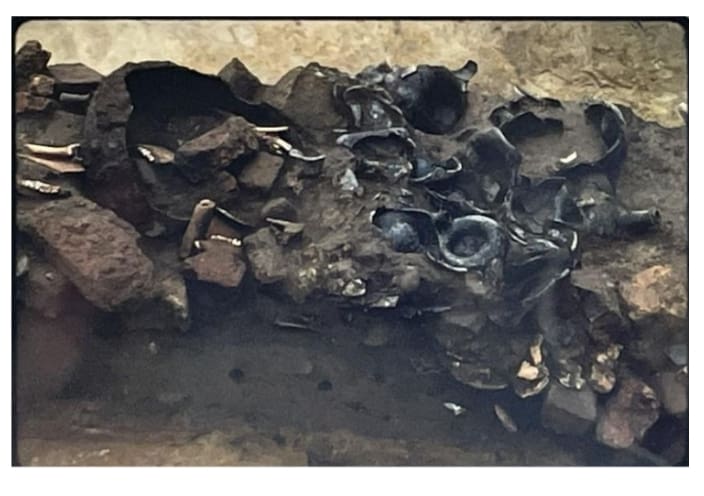
Figure 3 (Right) Detail of the main layer of the refuse from the pit, including a broken cauldron, wine bottles, bone, and more (Luccketti/JRI 1984).
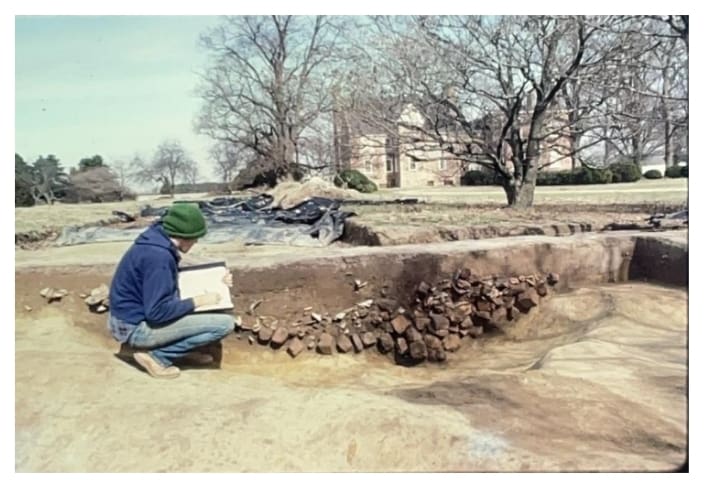
Figure 4 (Bottom left) Profile view of the partially excavated Rebellion pit facing north, toward the brick house (Luccketti/JRI 1984).
These clues, together with the tight date range and the condition of the artifacts found in the pit, indicated two things. First, although the pit was filled with refuse and sealed before the overlying garden features were created, these activities had occurred in quick succession, possibly within a decade or less. Second, the trash found in the pit had not accumulated gradually over time, as we would expect from everyday refuse disposal activities. Instead, it was the result of a single, large, and rather abrupt event, which had evidently caused considerable damage.
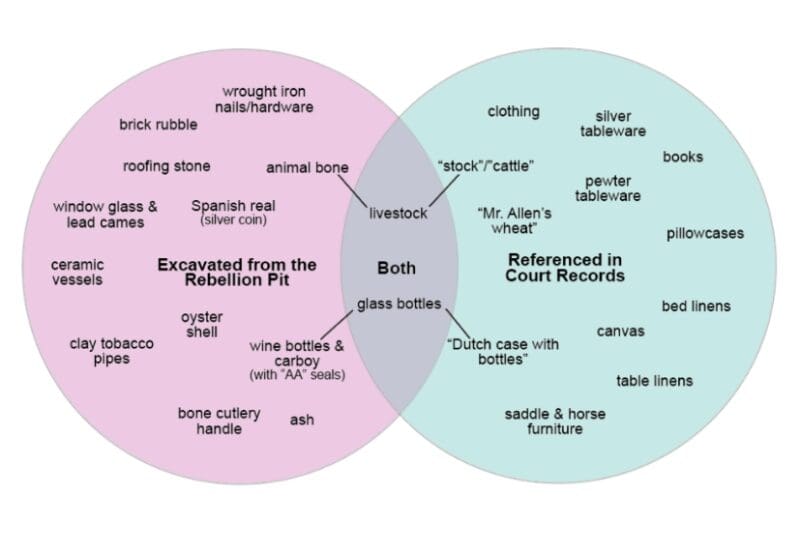
As Luccketti and his team compared their archaeological findings to events described in historical records, they noticed striking parallels between evidence from the refuse pit and descriptions of the damage caused by Baconian rebels who seized and garrisoned the brick house in the autumn of 1676. Most notably, the pit contained large quantities of butchered animal bone, along with ash indicating burning. Lawsuits brought by Arthur Allen II against the rebel leaders and supported by eyewitness testimony, reiterated the claim that, “During the late most wicked rebellion” the defendants “seized [Allen’s] house, destroyed his [live]stock, and plundered and carried away his household and m[erchan]table goods.” These details, together with the archaeological clues indicating that the disposal event happened sometime after the brick house was built and inhabited (ca. 1665-1675), but before the creation of the garden (ca. 1680-1700), strongly supports a connection between the refuse pit and the 1676 Rebellion siege (2).
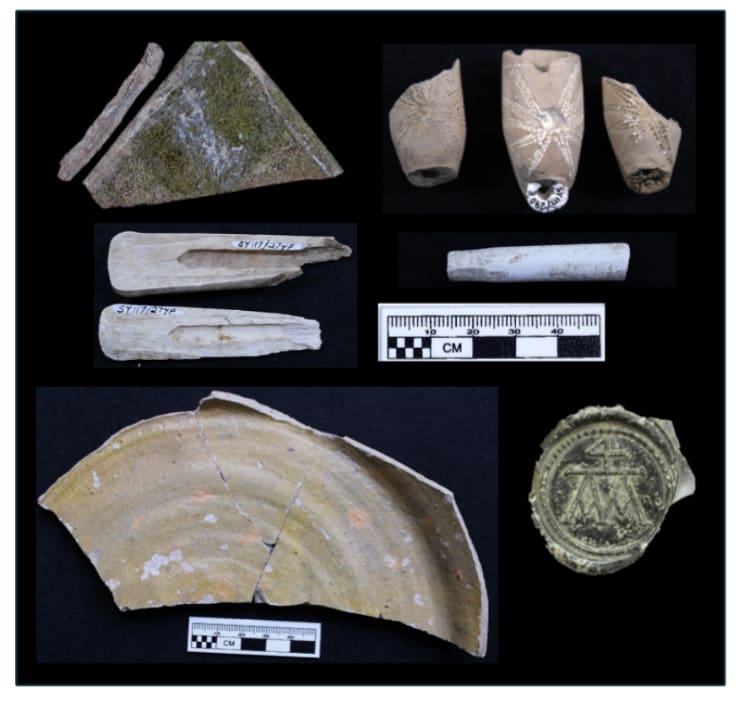
While the “Rebellion pit” was the result of extraordinary events, its contents consisted mainly of ordinary household trash, unusual only because of the size and context of the deposit. Aside from the animal bone and ash, most of its contents are never explicitly referenced in written records (Figure 5). Although witnesses like Elizabeth Blesley (3), who worked in the Allen household at the time, testified regarding various items “plundered and carried away” by the rebels, most of those were not represented in the pit. These tended to be things like textiles and books which were both expensive (and therefore worth stealing) and unlikely to preserve well in the ground even if they were discarded. Conversely, most of the everyday items that were excavated from the pit, like ceramic vessels and tobacco pipes (Figure 6), were never mentioned. Such common, low-cost items were found in every colonial household; yet they seldom appear in written records at all. Far more valuable were the “merchantable goods” they contained, which the rebels consumed or destroyed during the months-long siege.
In the 1970s and 1980s, archaeologists concentrated on identifying and establishing a chronology, or timeline, for the house, garden, and other key features such as artifacts were mainly used as tools for dating. In my research, I return to these finds from the Rebellion pit and other contexts spanning the colonial period, but primarily focused on the tumultuous and consequential decades around Bacon’s Rebellion. Analyzing these artifacts and comparing their distribution patterns across the Bacon’s Castle site over time provides insights into changing labor, trade, and social relationships both within and beyond the Allen plantation. Weaving together archaeological findings with evidence from Surry County’s unusually well-preserved colonial records sheds new light on the lives of the predominantly unfree people who built the physical landscape of the plantation with their skills and labor, while forging community and negotiating space for themselves and their families within a landscape of rising inequality.
Sources
- Luccketti, N.M. 1978. Archaeological Survey of Bacon’s Castle, Surry County, Virginia. Virginia Research Institute for Archaeology, Williamsburg VA; 1985. Bacon’s Castle Garden Archaeological Project IV, 1984 Garden Excavation, Interim Report. Yorktown, VA: Virginia Historic Landmarks Division Research Center; and 1988. Archaeological Excavations at Bacon’s Castle Garden, Surry County, Virginia. James River Institute for Archaeology, Inc., Williamsburg, VA. All reports on file with APVA/Preservation Virginia, Richmond, VA.
- “Bacon’s Men in Surry.” 1898. Virginia Magazine of History and Biography, Vol. 5, No. 4, pp. 368-373; Surry County Deeds, Wills & c., Book II, 1677; Surry County Orders, I, 1677, pp. 143-145 and 167-170.
- To hear more about Elizabeth Blesley and her account, check out the recording from our May program, “Women’s Perspectives on Bacon’s Rebellion.”
- Planto, R. 2026. “All Seeds of Future Discords”: Lives and Afterlives of the Rebellion Era at Bacon’s Castle, Surry County, Virginia, ca. 1660s-1710s. PhD Dissertation. The College of William and Mary, Williamsburg, VA.
Want to learn more?
To learn more about the archaeology of the 1676 refuse pit and the broader “Rebellion era” at Bacon’s Castle and beyond, join Dr. Planto and Nicholas Luccketti, MA, RPA on August 19, 2026 for “The Archaeology of Bacon’s Rebellion,” part of our series Reconsidering Bacon’s Rebellion at 350 Years. You can also find recordings of past Bacon’s Rebellion at 350 programs on our “Resources” page, here.


