By Allyson Gray, Edward D. Ragan, Jeff Wright, and Julia A. King
This year marks the 350th anniversary of Bacon’s Rebellion, one of the most studied 17th-century conflicts in North America. As early as 1705, historians began their examination of Bacon’s insurrection to assess its implications for American history, from changing ideas about political authority to the shift to African slavery in the American South.
Not until 1957, however, when Wilcomb Washburn published his doctoral dissertation, did historians begin to grapple with the role played by the colony’s Native nations in the rebellion. Reportedly shaped by his experiences in World War II, Washburn pointed out the obvious: Virginia’s Indigenous communities were the principal focus of Nathaniel Bacon’s ire, and he aimed to destroy them through a program of annihilation and enslavement.
Bacon’s march on the Pamunkeys, whose principal towns were on the Pamunkey River, reveals Bacon’s Native agenda. In August 1676, Bacon and his army left Jamestown for Pamunkey Neck with the goal of capturing Cockacoeske, the Pamunkey weroansqua (leader), and selling her and the Pamunkeys into slavery. The Pamunkey nation was the group who lived closest to Jamestown.
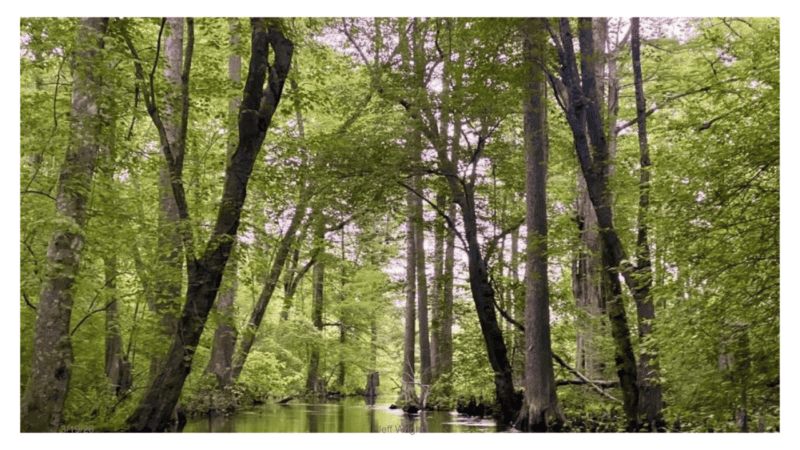
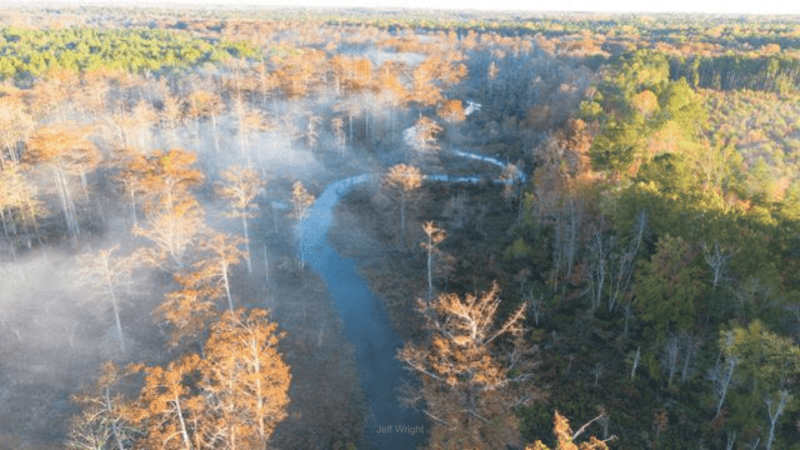
But Cockacoeske, the Pamunkeys, and perhaps as many as 1400 other Native people from the colony’s many Native nations, were at least one step ahead of Bacon. As early as April 1676, fully four months before Bacon’s march, the Pamunkeys, Mattaponis, Chickahomineys, Rappahannocks, Nanzaticos, and other nations lured Bacon away from their towns in Pamunkey Neck and into Dragon Swamp, a 90,000-acre landscape of meandering blackwater streams and swamps impenetrable to outsiders.

Cockacoeske later complained to the royal commissioners dispatched to Virginia about the deplorable conditions she and the colony’s Indigenous people experienced while in the Dragon. Fear and starvation, Cockacoeske implied, was the plight of the Natives in a landscape the English themselves had found forbidding.
A new study, however, of records rarely used to uncover what transpired in the Dragon Swamp in August 1676 is revealing a new and fascinating narrative that deepens and even transforms our understanding of the Native role in Bacon’s Rebellion. This is a story of Indigenous agency, ecological knowledge, and political skill, and calls into question not only how successful Bacon really was but how the Pamunkeys, Mattaponis, Chickahominies, Rappahannocks, and other nations shaped the insurrection’s outcome.
Further Reading
Megan D. Postemski, Allyson Gray, Julia A. King. Edward D. Ragan, James D. Rice. G. Anne Richardson, Kendall Stevens, and Jeffrey W. Wright
2025 Mapping the Dragon: An Indigenous History of Bacon’s Rebellion. Prepared for the American Battlefield Protection Program, National Park Service. Available online at https://www.academia.edu/144346706/Mapping_the_Dragon_AN_INDIGENOUS_HISTORY_OF_BACONS_REBELLION.
Washburn, Wilcomb E. 1957 The Governor and the Rebel: A History of Bacon’s Rebellion in Virginia. Chapel Hill: University of North Carolina Press.
Authors Allyson Gray, Edward D. Ragan, Jeff Wright, and Julia A. King are also the panelists for our upcoming July 15th panel lecture. Please look forward to attending the event wither in person at Jamestown Settlement or virtually. Click here more information on the event and tickets!


